Genesis 22
1Some time later God tested Abraham and said to him, “Abraham!” “Here I am,” he answered.
2“Take your son,” God said, “your only son Isaac, whom you love, and go to the land of Moriah. Offer him there as a burnt offering on one of the mountains, which I will show you.”
3So Abraham got up early the next morning, saddled his donkey, and took along two of his servants and his son Isaac. He split the wood for a burnt offering and set out for the place God had designated.
4On the third day Abraham looked up and saw the place in the distance. 5“Stay here, both of you, with the donkey,” Abraham told his servants. “The boy and I will go over there to worship, and then we will return to you.”
Genesis 22:3–5 Commentary
Abraham Expects Both to Return Alive:
Abraham rises early the next morning and sets out for Moriah without delay. In Genesis 22:5, he tells his young men: "Stay here with the donkey; the boy and I will go over there and worship, and then we will return to you." This confident statement reveals the immense depth of Abraham’s faith: he fully expected both of them to return from the altar alive.
Abraham Counted on Isaac’s Resurrection:
Walking up that mountain with a knife in his hand, Abraham knew God was fully capable of raising Isaac from the dead if it came to that. Two millennia later, the apostolic letter to the Hebrews confirms this reading directly (Hebrews 11:17–19): Abraham considered “that God was able even to raise him from the dead.”
Abraham Did the Cold Math on Resurrection:
In the apostolic commentary of Hebrews 11:19, written two millennia later, the Greek word for “considered” is logizomai, which literally means to calculate, run financial numbers, and balance a ledger. For three agonizing days on that trail, Abraham did the cold math, calculated God’s flawless track record against His covenant promise, and realized a resurrection was the only logical bottom line. Just one chapter earlier, Genesis 21:12 had already told Abraham, “Through Isaac shall your offspring be named,” and Abraham trusted that promise absolutely, even while carrying the knife up the mountain himself.
“On the Third Day” Points Straight to Messiah:
Verse 4 (Genesis 22:4) marks the timeline: on the third day Abraham looked up and saw the place in the distance. For three days Isaac was, as far as Abraham was concerned, a dead man walking, and on the third day he is given back. Two millennia later, Hebrews 11:19 says Abraham got Isaac back from death in a figure, and the Apostle Paul affirms that the Messiah was raised on the third day according to the Scriptures (1 Corinthians 15:4). Moriah is where the Father’s only Son is offered, and the third day is when He comes back.
6Abraham took the wood for the burnt offering and placed it on his son Isaac. He himself carried the fire and the sacrificial knife, and the two of them walked on together.
Genesis 22:6 Commentary
Isaac Carries the Wood — No Small Child:
Hauling the timber for his own sacrifice up the mountain proves Isaac was no fragile boy at this point, but a grown, able-bodied young man fully capable of bearing a heavy load.
7Then Isaac said to his father Abraham, “My father!” “Here I am, my son,” he replied. “The fire and the wood are here,” said Isaac, “but where is the lamb for the burnt offering?”
8Abraham answered, “God Himself will provide the Lamb for the burnt offering, my son.” And the two walked on together.
Genesis 22:7–8 Commentary
The Father and the Wood-Carrying Son:
As they ascend the mountain, Isaac asks in Genesis 22:7: "The fire and the wood are here, but where is the Lamb for the burnt offering?" The prophetic parallel is unmistakable: Abraham pictures God the Father, while Isaac, carrying the wood of his own sacrifice up Mount Moriah, directly foreshadows Yeshua the Messiah carrying the wood of His own cross.
The Ram Points Forward to the True Lamb:
Abraham answers, “God Himself will provide the Lamb for the burnt offering, my son,” yet a ram, not a lamb, is what is ultimately sacrificed on Mount Moriah (Genesis 22:13). The true Lamb was not provided that day on Moriah. John the Baptist pointed Him out two thousand years later in John 1:29: “Look, the Lamb of God, who takes away the sin of the world!” Abraham spoke a prophecy he would not live to see fulfilled in the flesh.
9When they arrived at the place God had designated, Abraham built the altar there and arranged the wood. He bound his son Isaac and placed him on the altar, atop the wood. 10Then Abraham reached out his hand and took the knife to slaughter his son.
Genesis 22:9–10 Commentary
Isaac’s Silence Reveals Willing Surrender:
Abraham binds Isaac and lays him on the altar, and Scripture gives no indication anywhere in the account that Isaac resists or fights back against his own father. That quiet trust perfectly maps onto the Messiah’s ultimate submission in Gethsemane. This isn’t a helpless child getting overpowered; it’s a terrifyingly accurate blueprint of the Messiah laying down His own life and declaring, “not My will, but Yours, be done” — the same surrender Yeshua Himself would voice two millennia later in the Gospels (Luke 22:42).
Abraham Counted on Physical Resurrection:
As revealed two millennia down the line in Hebrews 11:17–19, the patriarch’s faith was anchored in the biblical hope of a genuine physical resurrection to actual life, not some immortal soul waiting in heaven. Abraham expected, if it came to that, to watch God raise his son bodily from actual death.
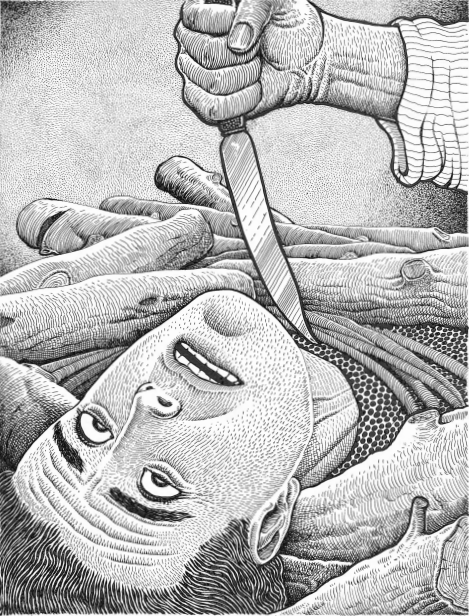
11Just then the Angel of YAHWEH called out to him from heaven, “Abraham, Abraham!” “Here I am,” he replied.
12“Do not lay a hand on the boy or do anything to him,” said the Angel, “for now I know that you fear God, since you have not withheld your only son from Me.”
Genesis 22:11–12 Commentary
The Angel Says “Fear God” and “From Me”:
Read Genesis 22:12 carefully: "now I know that you fear God, since you have not withheld your only son from Me." One speaker, designated the Angel of YAHWEH, speaks of God in the third person yet simultaneously claims the sacrifice as offered "to Me." This confirms the divine identity of the Angel of YAHWEH as the pre-incarnate Word, possessing the full authority and name of the Father.
13Then Abraham looked up and saw behind him a ram in a thicket, caught by its horns. So he went and took the ram and offered it as a burnt offering in place of his son. 14And Abraham called that place YAHWEH Will Provide (so to this day it is said, “On the mountain of YAHWEH it will be provided”).
Genesis 22:13–14 Commentary
The Ram in the Thicket Points to the Lamb:
When Isaac asked five verses earlier in Genesis 22:7 where the lamb was, Abraham answered with a staggering prophetic declaration: “God will provide for Himself the Lamb for the burnt offering, my son” (Genesis 22:8). Yet notice what Abraham actually finds caught in the thicket: not a lamb (seh), but a mature ram (ayil). That distinction is monumental. YAHWEH provided the ram as the immediate physical substitute to die on the wood so Isaac walked down the mountain alive and free. God certainly provided! But Abraham’s prophetic utterance — that God Himself would provide the Lamb—remained an unfulfilled promise on the divine calendar. The ram was the substitute for Isaac that day, but the promised Lamb was reserved for two millennia later, when John the Baptist pointed to Yeshua: “Look, the Lamb of God, who takes away the sin of the world!” (John 1:29). God provided the ram on Moriah, but He gave the Lamb at the cross.
YAHWEH-Yireh Proclaims God’s Covenant Faithfulness:
Abraham names the site YAHWEH-Yireh (“YAHWEH will provide” or “YAHWEH will see to it”). This is not a generic platitude about God helping people out in a pinch; it is a prophetic declaration rooted in covenant reality. Abraham learned firsthand that when God brings His servants to the absolute end of human strength, He does not abandon them. Fifteen centuries later, the Apostle Paul would echo this very principle in Romans 8:32, declaring that He who did not spare His own Son, but delivered Him up for us all, will freely give us all things. The name memorializes divine provision at the point of utter surrender.
Moriah and Zion — The Mountain of YAHWEH:
Verse 14 (Genesis 22:14) gives the proverb born from this event: “On the mountain of YAHWEH it will be provided.” In Genesis 22:2, God commanded Abraham to go to “the land of Moriah.” Nearly a millennium later, King Solomon built the Temple on this exact spot, explicitly identified in 2 Chronicles 3:1 as Mount Moriah at the threshing floor of Ornan the Jebusite. Geographically, “Zion” originally designated the Jebusite fortress just south of Moriah that David captured as the City of David (2 Samuel 5:7). But once the Ark of the Covenant was moved up to the Temple on Moriah, the name Zion poetically expanded across the biblical prophets to encompass the entire Temple Mount and the holy city itself (Psalm 2:6; Isaiah 2:3). Every later biblical mention of Zion, the Temple Mount, or the mountain of YAHWEH points straight back to Abraham on this ridge.
Two Mountains and Two Kingdoms — Moriah vs. Bashan:
Over four centuries after Abraham, King David in Psalm 68:15–16 celebrated this chosen ridge against the demonic heights of the north. As the Hebrew text reveals: “A mountain of the gods is Mount Bashan; a mountain of many peaks is Mount Bashan. Why do you gaze in envy, O mountains of many peaks? This is the mountain God chose for His dwelling, where YAHWEH will surely dwell forever” (Psalm 68:15–16). Put the two mountains side by side: the towering volcanic peaks of Bashan and Mount Hermon were the ancient strongholds of the rebel Sons of God from Genesis 6 and the giant Rephaim, the epicenter of dark supernatural rebellion. Yet David declares that those majestic northern heights gaze in bitter, jealous envy at the humble hill of Moriah where YAHWEH chose to dwell forever. Two mountains, two spiritual kingdoms: the arrogant heights of demonic rebellion versus the mountain of covenant sacrifice and divine redemption.
15And the Angel of YAHWEH called to Abraham from heaven a second time, 16saying: “By Myself I have sworn, declares YAHWEH, that because you have done this and have not withheld your only son, 17I will surely bless you, and I will multiply your descendants like the stars in the sky and the sand on the seashore. Your descendants will possess the gates of their enemies. 18And through your offspring all nations of the earth will be blessed, because you have obeyed My voice.”
19Abraham went back to his servants, and they got up and set out together for Beersheba. And Abraham settled in Beersheba.
Genesis 22:15–19 Commentary
The Messenger Speaks and Swears as God:
The Messenger of YAHWEH calls to Abraham a second time from heaven, and this figure again appears to be the divine Word unveiled two millennia later in the Gospel of John (John 1:1, 14: “In the beginning was the Word... and the Word became flesh”). Acting with supreme divine authority, He swears by His own name, since there is none greater to swear by.
God Repeats the Lifelong Covenant Promises:
God reiterates the same covenant promises already given repeatedly across this man’s life: Genesis 15:5’s descendants compared to the stars of heaven, Genesis 17:5–8’s promises concerning nations and covenant inheritance, and, further ahead still, Genesis 24:60’s blessing that Abraham’s descendants would possess the gates of their enemies.
Possessing the Gates Echoes to Caesarea Philippi:
Verse 17 (Genesis 22:17) promises that Abraham’s offspring will possess the gates of their enemies. In the ancient world, city gates were defensive fortifications protecting a seat of power, and Messiah is the singular Seed to whom this promise pointed. As the Apostle Paul explains two millennia later: “The Scripture does not say, ‘and to seeds,’ meaning many, but ‘and to your Seed,’ meaning One, who is Messiah” (Galatians 3:16). Two millennia later in the Gospels, Yeshua declares at Caesarea Philippi: “I will build My church, and the gates of Hades will not prevail against it” (Matthew 16:18). Standing at the foot of Mount Hermon — the epicenter of rebel spiritual powers traced from Genesis 6 through Genesis 14 — Yeshua proclaims that the enemy’s stronghold is doomed. Gates do not attack; gates defend! Yeshua was not picturing a church under siege cowering behind a wall, but His church on the offensive, storming the gates of darkness. The defensive gates of Hades cannot hold out against the advancing Seed of Abraham!
The Test Reveals Abraham’s Faith to Himself:
In Genesis 22:18, YAHWEH confirms the supreme covenant promise: "And through your offspring all nations of the earth will be blessed, because you have obeyed My voice." Through Abraham’s physical lineage comes Yeshua the Messiah, in whom all families of the earth find redemption.
20Some time later, Abraham was told, “Milcah has also borne sons to your brother Nahor: 21Uz the firstborn, his brother Buz, Kemuel (the father of Aram), 22Chesed, Hazo, Pildash, Jidlaph, and Bethuel.”
23And Bethuel became the father of Rebekah. Milcah bore these eight sons to Abraham’s brother Nahor. 24Moreover, Nahor’s concubine, whose name was Reumah, bore Tebah, Gaham, Tahash, and Maacah.
Genesis 22:20–24 Commentary
Rebekah, the Future Bride, Enters the Story:
Word reaches Abraham that his brother Nahor, listed eleven chapters earlier among Terah’s sons back in Genesis 11:26–29, has also fathered children. Among those children is Bethuel, who fathers Rebekah — the bride God has already been quietly arranging while Abraham was still climbing a mountain with a knife in his hand.
Uz and Buz Echo the World of Job:
Nahor’s firstborn is Uz, and his brother is Buz (Genesis 22:21). Down the corridor of Old Testament history, those same names turn up in the book of Job: Job lived in the land of Uz (Job 1:1), and Elihu, the young man who speaks near the end of that book, is a Buzite (Job 32:2). The names aren’t proof that Job came from this family, because Uz shows up in both earlier and later genealogies (back in Genesis 10:23 and ahead in Genesis 36:28), but the echo is worth noticing. The book that opens with the sons of God presenting themselves before YAHWEH shares names with Abraham’s own family tree.
Genesis 22:1–2 Commentary
God Tests to Refine Faith, Never to Entice:
“God tested Abraham.” Two millennia down the timeline in the apostolic epistles, James 1:13–14 states it without any ambiguity: “God cannot be tempted with evil, and He Himself tempts no one… each person is tempted when he is lured and enticed by his own desire.” What God does here is test and refine His people, exposing and strengthening genuine faith. This wasn’t a compliance check for an instant payoff. The Almighty was testing whether Abraham would still drop to his knees and obey when doing so completely shattered his own legacy and survival.
“Here I Am” and the “Only Son” of Promise:
When God calls his name in Genesis 22:1, Abraham responds, "Here I am" (translating the Hebrew Hineni). This phrase communicates total readiness, availability, and submission — effectively saying: I am here, ready to do whatever You command. God’s instructions in Genesis 22:2 test him to the core: "Take your son, your only son Isaac, whom you love, and go to the land of Moriah, and offer him there as a burnt offering." Isaac alone was the son of covenant promise.
“Your Only Son” Shadows John 3:16 and Romans 8:32:
Hear the wording of the command: “your only son... whom you love.” God says it, Abraham hears it, and two millennia later the New Testament picks it up. In John 3:16, Yeshua declares that God so loved the world that He gave His only Son, and our heading points to John 3:1–21 for exactly this reason. Writing to the Romans two millennia down the road, the Apostle Paul in Romans 8:32 says the Father “did not spare His own Son but gave Him up for us all,” and the language echoes what the Angel says at the end of this chapter: Abraham did not withhold his son (Genesis 22:12, 16). Abraham’s willingness is the shadow. The Father’s actual giving is the substance.
Mount Moriah — Ground Zero for Biblical History:
Over a thousand years after Abraham climbed Mount Moriah, 2 Samuel 24:18–25 records David building an altar on this same mountain during the United Monarchy, stopping a plague sent as judgment on Israel, and Solomon built the Temple itself on this exact site (2 Chronicles 3:1). After Babylon destroyed Solomon’s Temple, the returning Jewish exiles rebuilt the Second Temple on that same ground, and Herod later massively expanded the platform surrounding it through enormous retaining walls, forming much of what is still recognized today as the Temple Mount complex.
Islamic and Rabbinic Claims on Mount Moriah:
Looking two millennia down the corridor of prophecy, that Second Temple would ultimately be destroyed by the Roman legions in 70 AD, fulfilling Yeshua’s solemn warning in the Gospels that “not one stone here will be left on another” (Matthew 24:2). Centuries later, in 691 AD, the Umayyad Caliphate constructed the Dome of the Rock directly on the Temple Mount. Islamic tradition claims that Muhammad ascended into heaven from this exact location, a teaching standing in direct conflict with what Yeshua declared in John 3:13 about who alone has ascended to heaven. Rabbinic tradition, separately, associates Mount Moriah with the very “foundation stone” of the earth itself, the spot from which creation is said to have spread outward.