Genesis 42
1When Jacob learned that there was grain in Egypt, he said to his sons, “Why are you staring at one another?”
2“Look,” he added, “I have heard that there is grain in Egypt. Go down there, all of you, and buy grain for us from there, so that we may live and not die.”
3So ten of Joseph’s brothers went down to buy grain from Egypt. 4But Jacob did not send Joseph’s brother Benjamin with his brothers (for he thought, “I am afraid that harm might befall him”).
5So the sons of Israel were among those who came to buy grain, since the famine had also spread to the land of Canaan.
6Now Joseph was the ruler of the land; he was the one who sold grain to all its people. So when his brothers arrived, they bowed down before him with their faces to the ground.
Genesis 42:5–6 Commentary
The Brothers Bow — Fulfilling Joseph’s Dream Unawares:
Verse 5 (Genesis 42:5) notes that “the sons of Israel” arrived among the travelers — a reminder that Jacob and Israel remain fully interchangeable names for the patriarch throughout this account. When the brothers enter, they bow before the Egyptian governor with their faces to the ground (Genesis 42:6), utterly unaware that they are fulfilling the exact dream they mocked Joseph for having five chapters earlier back in Canaan — “your sheaves gathered around and bowed down to my sheaf” (Genesis 37:7). God’s word doesn’t need help coming true. It just does — on schedule, whether anyone in the room realizes it or not.
7And when Joseph saw his brothers, he recognized them, but he treated them as strangers and spoke harshly to them. “Where have you come from?” he asked. “From the land of Canaan,” they replied. “We are here to buy food.”
8Although Joseph recognized his brothers, they did not recognize him. 9Joseph remembered his dreams about them and said, “You are spies! You have come to see if our land is vulnerable.”
Genesis 42:7–9 Commentary
Twenty-One Years Removed From the Dothan Pit:
The timeline hits hard when you trace the years. Rewind the clock five chapters to where the nightmare began: Joseph was just seventeen when his brothers hurled him into the pit at Dothan (Genesis 37:2). Thirteen years later he stood before Pharaoh at age thirty (Genesis 41:46). Add the seven years of plenty plus the first year of famine, and Joseph is now about thirty-eight years old — roughly twenty-one years removed from that pit. Dressed in royal Egyptian linen, clean-shaven, speaking through an interpreter, and carrying the authority of an imperial viceroy, nothing about him suggests a Hebrew shepherd to men who have spent over two decades assuming he was dead. They have no earthly reason to recognize him.
“Nakedness of the Land” — Testing Brotherly Remorse:
In Genesis 42:9, Joseph remembers his boyhood dreams and accuses them of spying to see if the land is vulnerable. While our text translates the phrase dynamically as “if our land is vulnerable,” the Hebrew phrasing (ervat ha'aretz, which the ESV renders literally as “the nakedness of the land”) was a classic ancient Near Eastern military idiom for exposed, undefended border frontiers where an invading army might strike. By treating them as hostile foreign spies, Joseph forces them to account for their entire family background, setting the stage to test whether twenty-one years have produced genuine remorse.
10“Not so, my lord,” they replied. “Your servants have come to buy food. 11We are all sons of one man. Your servants are honest men, not spies.”
12“No,” he told them. “You have come to see if our land is vulnerable.”
13But they answered, “Your servants are twelve brothers, the sons of one man in the land of Canaan. The youngest is now with our father, and one is no more.”
Genesis 42:10–13 Commentary
“Honest Men” — A Hollow Defense Given Their Past:
The brothers protest that they are “honest men” (Genesis 42:11) — a defense that collapses completely against their violent track record. Looking at their bloody track record, these are the very men who sold their own seventeen-year-old brother into slavery five chapters earlier (Genesis 37:28), and the exact same Simeon and Levi who eight chapters back had butchered the defenseless men of Shechem (Genesis 34:25–29). In this particular moment, however, they happen to be telling the truth. When they say “one is no more” (Genesis 42:13), they mean it: as far as they know, Joseph has been dead for more than two decades. Under the intense pressure of this interrogation, the hard crust around consciences sealed shut for twenty-one years is finally beginning to crack. Joseph tests them, and the pressure of that test cracks open a conscience that has stayed sealed shut for twenty-one years.
14Then Joseph declared, “Just as I said, you are spies! 15And this is how you will be tested: As surely as Pharaoh lives, you shall not leave this place unless your youngest brother comes here. 16Send one of your number to get your brother; the rest of you will be confined so that the truth of your words may be tested. If they are untrue, then as surely as Pharaoh lives, you are spies!”
17So Joseph imprisoned them for three days, 18and on the third day he said to them, “I fear God. So do this and you will live: 19If you are honest, leave one of your brothers in custody while the rest of you go and take back grain to relieve the hunger of your households. 20Then bring your youngest brother to me so that your words can be verified, that you may not die.” And to this they consented.
Genesis 42:14–20 Commentary
“I Fear God” — Joseph Rejects Egypt’s Pantheon:
Joseph initially demands Benjamin be brought under threat of imprisonment, swearing by the life of Pharaoh (Genesis 42:15–16). But on the third day, he moderates his terms, uttering the confession that ought to have stopped every brother in that room cold in Genesis 42:18: “I fear God. So do this and you will live” Living in pagan Egypt for over two decades had not compromised Joseph's covenant faith — he openly confessed the true God without hesitation.
Third-Day Deliverance — From Moriah to the Resurrection:
Verse 17 (Genesis 42:17) says Joseph held them in custody for three days, and on the third day he offered them life. Scripture keeps running its redemptive deliverances on this exact prophetic clock — even if modern church tradition seems utterly incapable of counting to three, attempting to squeeze Messiah's literal “three days and three nights” into a thirty-hour Friday-to-Sunday stretch of fuzzy math. When the biblical text counts three days, it means it. Way back twenty chapters earlier on Mount Moriah, Isaac was spared on the third day (Genesis 22:4). Just two chapters earlier in Pharaoh’s dungeon, the cupbearer was restored and the baker executed on the third day (Genesis 40:12–13, 20). Here the brothers are brought out of prison and offered life on the third day. Over eleven centuries later, the prophet Hosea would declare that God will raise His people up on the third day (Hosea 6:2), and nearly two millennia down the road the Apostle Paul would confirm the ultimate fulfillment: the Messiah was raised on the third day according to the Scriptures (1 Corinthians 15:4). The pattern isn’t random. It keeps pointing to the day that matters most.
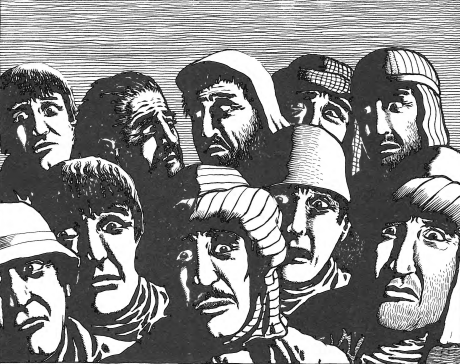
21Then they said to one another, “Surely we are being punished because of our brother. We saw his anguish when he pleaded with us, but we would not listen. That is why this distress has come upon us.”
22And Reuben responded, “Didn’t I tell you not to sin against the boy? But you would not listen. Now we must account for his blood!”
Genesis 42:21–22 Commentary
The Brothers Finally Confess Their Guilt Aloud:
Twenty-one years of silence collapse as the brothers confess their hidden crime directly to one another: “Truly we are guilty concerning our brother” (Genesis 42:21). They remember his desperate anguish, his pleading cries from the pit, and their own callous refusal to listen. That guilt has been simmering inside every one of them for two decades. Reuben cannot resist reminding them that he warned them not to sin against the boy (Genesis 42:22) — demonstrating once again that YAHWEH’s moral law governed human accountability over four centuries before its formal codification at Sinai, anticipating what the prophets and apostles would affirm down the corridor of biblical history: God’s righteous standard never changes (Malachi 3:6; Romans 5:13; 1 John 3:4).
23(They did not realize that Joseph understood them, since there was an interpreter between them.) 24And he turned away from them and wept. When he turned back and spoke to them, he took Simeon from them and had him bound before their eyes.
Genesis 42:23–24 Commentary
Ruling an Empire Without Losing a Tender Heart:
Hearing his brothers confess their guilt in their native Hebrew — unaware that their Egyptian interrogator understands every word without his interpreter (Genesis 42:23) — Joseph turns away and weeps. After everything they did to him, he still loves these men enough for their grief to break his heart. That is not weakness. Governing an empire while weeping in private is no contradiction; it displays a spiritual maturity this fractured family has never once demonstrated. Returning to business, he has Simeon bound before their eyes (Genesis 42:24) — selecting the second-born ringleader as hostage while sparing Reuben, who had attempted to deliver him.
25Then Joseph gave orders to fill their bags with grain, to return each man’s silver to his sack, and to give them provisions for their journey. This order was carried out, 26and they loaded the grain on their donkeys and departed.
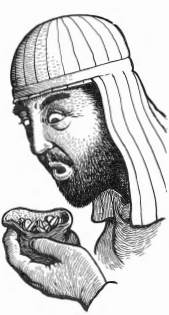
27At the place where they lodged for the night, one of them opened his sack to get feed for his donkey, and he saw his silver in the mouth of the sack. 28“My silver has been returned!” he said to his brothers. “It is here in my sack.” Their hearts sank, and trembling, they turned to one another and said, “What is this that God has done to us?”
Genesis 42:25–28 Commentary
Twenty-One Years of Guilt Expects Divine Judgment:
Joseph secretly orders their purchase money returned into their sacks of grain (Genesis 42:25). When one brother opens his sack at the lodging place and discovers his silver, sheer terror strikes the group. Genesis 42:28 records their reaction: "Their hearts sank, and trembling, they turned to one another, saying, 'What is this that God has done to us?'" Men burdened by two decades of unconfessed guilt instinctively interpret every unexpected turn as divine justice catching up with them.
29When they reached their father Jacob in the land of Canaan, they described to him all that had happened to them: 30“The man who is lord of the land spoke harshly to us and accused us of spying on the country.
31But we told him, ‘We are honest men, not spies. 32We are twelve brothers, sons of one father. One is no more, and the youngest is now with our father in the land of Canaan.’
33Then the man who is lord of the land said to us, ‘This is how I will know whether all of you are honest: Leave one brother with me, take food to relieve the hunger of your households, and go. 34But bring your youngest brother back to me so I will know that you are not spies but honest men; then I will give your brother back to all of you, and all of you may trade in the land.’”
35As they began emptying their sacks, there in each man’s sack was his bag of silver! And when they and their father saw the bags of silver, they were dismayed.
36Their father Jacob said to them, “You have deprived me of my sons. Joseph is gone and Simeon is no more. Now you want to take Benjamin. Everything is going against me!”
37Then Reuben said to his father, “You may kill my two sons if I fail to bring him back to you. Put him in my care, and I will return him.”
38But Jacob replied: “My son will not go down there with you, for his brother is dead, and he alone is left. If any harm comes to him on your journey, all of you will bring my gray hair down to Sheol in sorrow.”
Genesis 42:29–38 Commentary
Reuben’s Clumsy Pledge — Grandchildren as Hostages:
Reuben, well-meaning but clumsy as always, offers the lives of his own two sons as collateral for Benjamin’s safety (Genesis 42:37). The same man who had tried, half-heartedly, to rescue Joseph from the pit five chapters earlier in Dothan (Genesis 37:21–22, 29–30) is still grasping for firstborn leadership with absurd guarantees Jacob refuses outright.
Genesis 42:1–4 Commentary
Benjamin — Jacob’s Last Living Link to Rachel:
Ten brothers go down to Egypt, but Benjamin stays behind. Joseph and Benjamin are the only two sons Rachel ever bore Jacob, and with Joseph presumed dead, Jacob refuses to gamble with the sole surviving child of the wife he loved most.